


Regional Transit Corridors
Overview
The Regional Transit Plan (RTP) identifies 30 transit corridors that together would create a strong transit network in Central Maryland. The transit corridors are places that show a strong demand for transit and connect people across the region. Transit corridors are not just lines on a map showing where current service goes—they are opportunities to explore new ways to make it easier to travel without a car, including new transportation modes, schedules, routes, and infrastructure.
Take the survey to tell us about your goals for transit corridors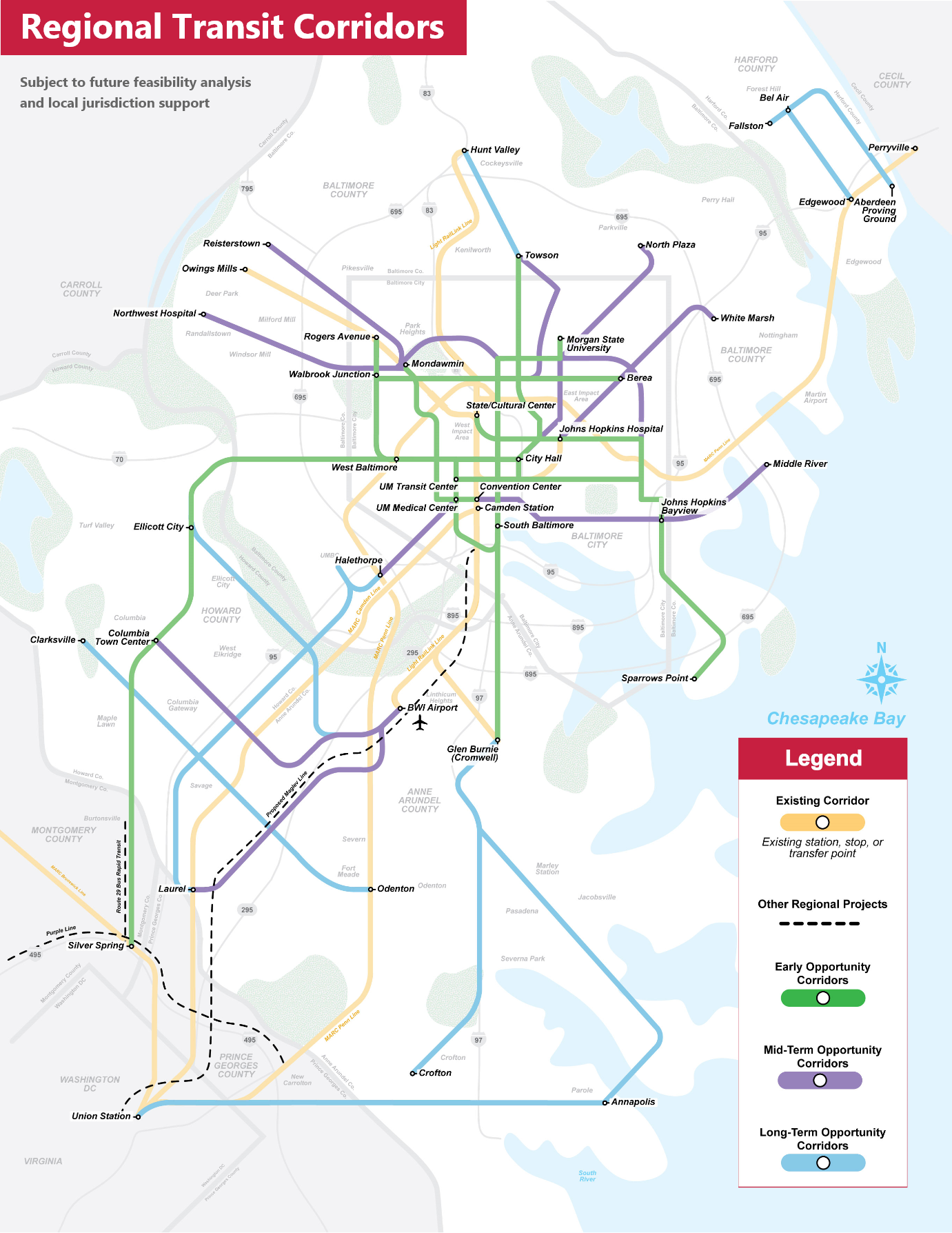
Early Opportunity Corridor Studies
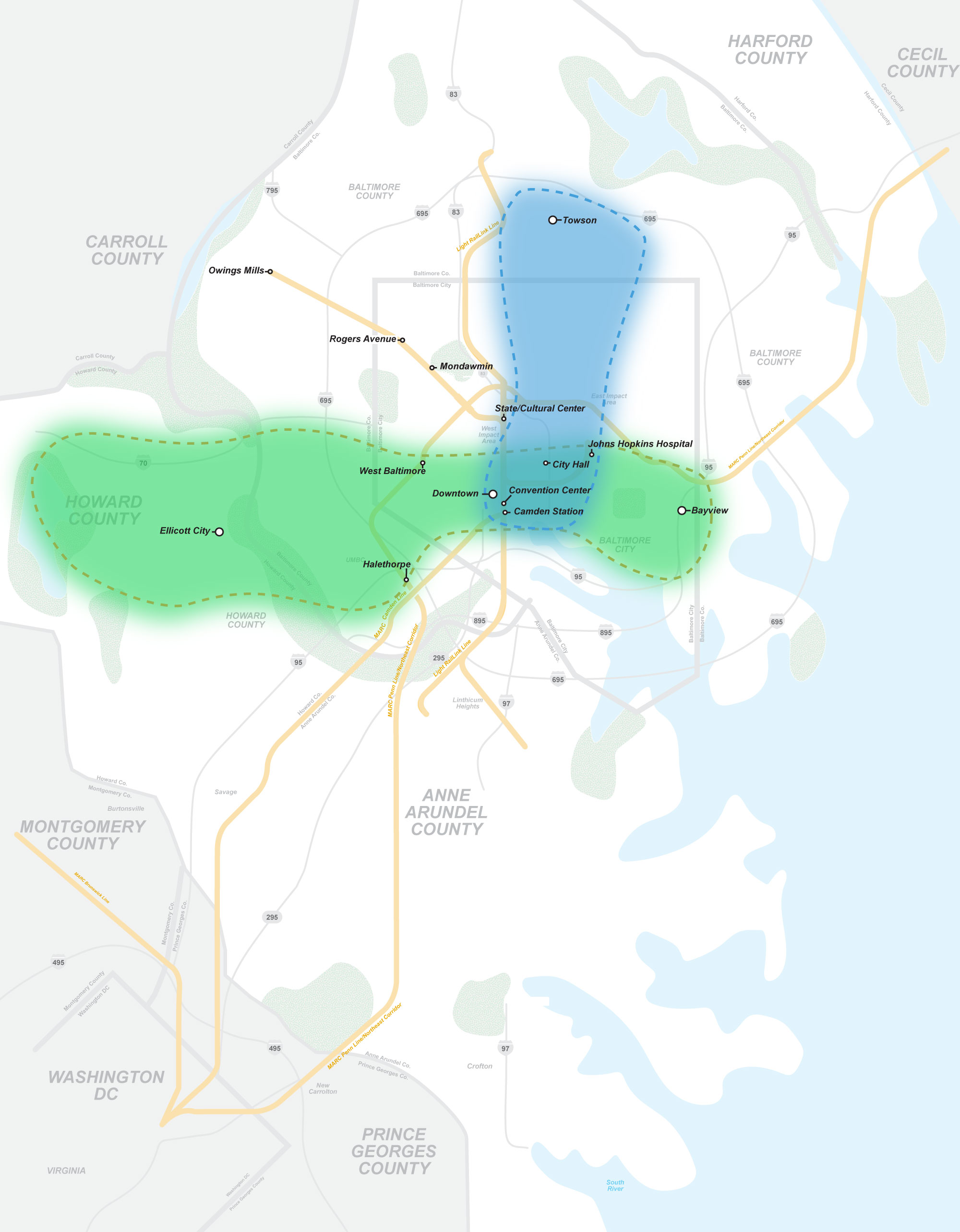
In 2019-2020, MDOT MTA worked with the Regional Transit Plan Commission, local jurisdictions, and members of the public to prioritize transit corridors based on data showing transit readiness and potential to contribute to equitable transportation outcomes, including access to jobs and other essential trips. Starting in 2021, MDOT MTA, Baltimore City, Baltimore County, and Howard County will be studying two transit corridors:
- North-South: Towson to Downtown
- East-West: Bayview to Ellicott City
For details about how the regional transit corridors were identified and prioritized click here to view Chapter 6 of the RTP
What goes into a Corridor Study?
Corridor Studies identify the range of options (also known as alternatives) that best serve existing and future transit demand for a specific study area. In each case, MDOT MTA and its partners will work with jurisdictional partners and the public to set corridor-specific goals and objectives to evaluate potential routes, modes, and service characteristics (stop/station locations and frequency).
Corridor studies look at:

Previous Planning Studies:
What can we learn from the past?

Interjurisdictional coordination:
How can these projects best fit other city, county, and state-level efforts?

Public Engagement:
What do riders, residents, and
employers think?

Market Analysis:
Who would be likely to use transit?

Travel Pattern Analysis:
Where do people want to go now and in the future?

Land Use Analysis:
What would be surrounding transit stops/stations?
What comes out of a Corridor Study?
It takes approximately one year for Corridor Studies to narrow down all of the possible ways to travel between destinations into a final group of two to three alternatives that will receive further engineering analysis. Each alternative offers a different approach to how the service would work, including these characteristics:
Mode
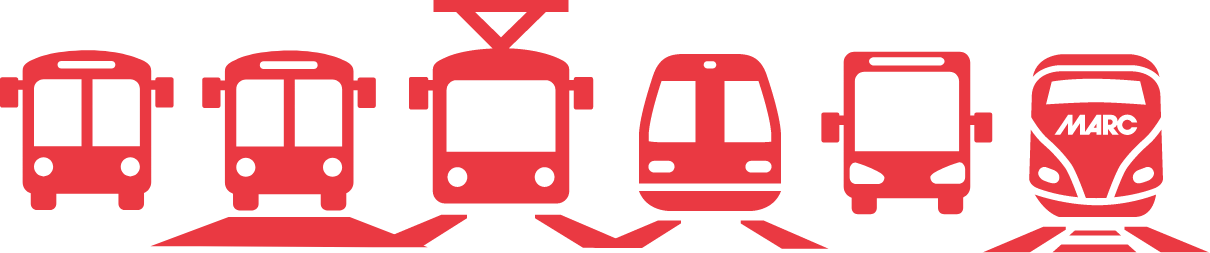
What combination of limited stop or express bus, bus rapid transit, light rail, heavy rail, commuter rail, and other new technologies is the best fit?

Alignment
Where would stops and stations be located and how close would they be to each other?

Schedule
What type of frequencies and operating hours can you expect?
Transportation Infrastructure
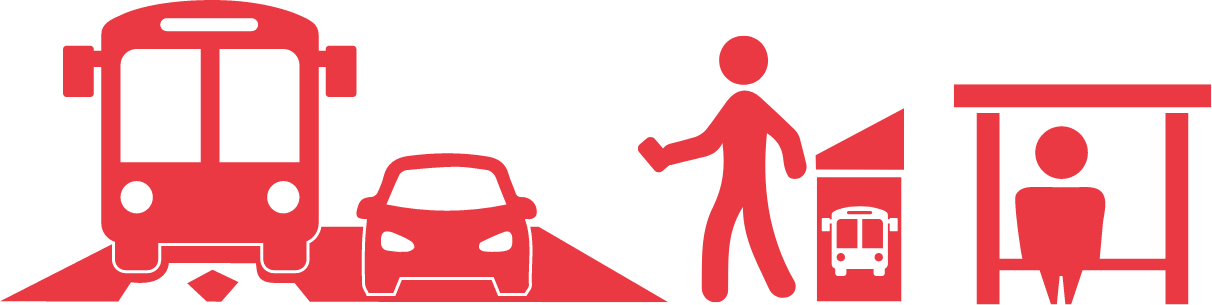
What types of physical improvements, including dedicated right-of-way or new stop amenities would improve the customer experience?
What is the process?

Spring 2021 |
|---|
CollaborateThe Project Team will work with local jurisdictions, institutional stakeholders, and the public to set goals and objectives to help compare options for route and stop/station locations as well as the type of transit (for example, bus or rail). Tell us what you think!
Click here to take the Public Survey |


Summer 2021 |
|---|
ProposeThe Project Team will gather small groups of representatives from community groups, employers, and other interested stakeholders to get initial feedback on a range of potential routes and modes. |

Fall 2021 |
|---|
EvaluateThe Project Team will present a full scoring of alternatives based on cost, ridership, and community priorities to the public. |

Winter 2021 |
|---|
RecommendThe Project Team will identify a final 2-3 alternatives that will receive further engineering study. |
Stay Up to Date
Sign up for email list to stay up to date on the latest RTP news
This form was created by ChronoForms

Call the Project Team
(443) 475-0687

Email the Project Team
This email address is being protected from spambots. You need JavaScript enabled to view it.